

Full Breakdown: Specs, Price, Battery, Subsidy, Reality vs Hype
Introduction: A Comeback Nobody Expected
The name Tata Motors Nano still carries emotional weight in India. Once marketed as the “people’s car,” it promised affordable mobility but failed due to perception and safety concerns. Production eventually stopped in 2018. (Wikipedia)
Now, nearly a decade later, the Nano is back in headlines—but this time, as an electric vehicle (EV).
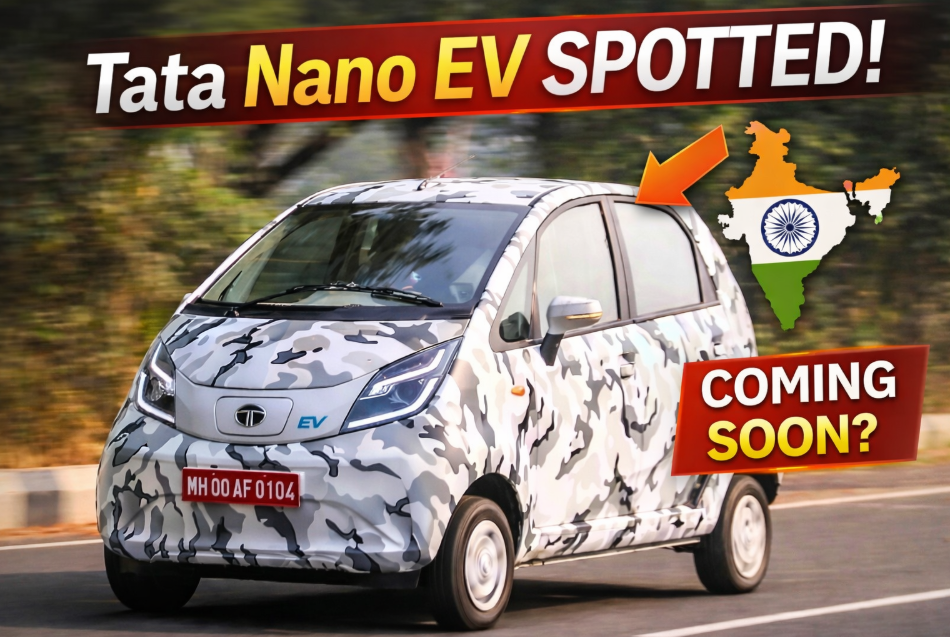
Recent spy sightings and reports suggest that a Tata Nano EV is being tested, sparking fresh excitement in the Indian auto market. While there is no official confirmation yet, the possibility alone has created massive buzz.
If launched correctly, the Nano EV could do what the original Nano couldn’t—redefine affordability with aspiration.
What Spy Reports Suggest
Initial reports indicate that the Nano EV prototype looks very similar to the original Nano in terms of shape and size.
- Compact “tall-boy” design retained
- Minimal exterior changes
- Possible EV-specific front grille and lighting
- Charging port integrated
Earlier spy sightings also showed a charging point without major design changes, suggesting Tata may focus more on internal upgrades than external redesign. (Car and Bike)
This strategy makes sense:
Keep cost low → focus on battery + tech → maintain affordability
Expected Specifications (Based on Reports & Industry Estimates)
While official specs are not confirmed, here’s what multiple reports suggest:
Battery & Range
- Battery: 15–25 kWh lithium-ion
- Expected range:
- 150 km (base realistic estimate) (Cars24)
- 200–315 km (mid-range expectation) (https://nmvcpnd.in/)
- Some speculative reports even claim higher figures, but those seem unrealistic
Realistic expectation: 200–250 km (city-focused EV)
Performance
- Power: ~30–70 HP
- Torque: Instant EV torque (city-friendly)
- Top speed: ~80–100 km/h
Perfect for:
- City driving
- Office commute
- Last-mile mobility
Charging
- Home charging: 6–8 hours
- Fast charging: ~60–80% in 30–60 minutes
Target audience = urban users with daily charging routine
Features (Expected)
- Touchscreen infotainment
- Digital instrument cluster
- Power windows
- Smartphone connectivity
- Basic safety features (ABS, airbags expected) (CarDekho)
Expected Price in India
This is the most important factor—and also the most confusing.
Different reports suggest:
- ₹4.5 – ₹5 lakh (aggressive pricing) (Facebook)
- ₹5 – ₹7 lakh (most realistic range) (Cars24)
- ₹6 – ₹9 lakh (premium speculation) (EVFY)
My realistic estimate:
₹5 – ₹6.5 lakh (ex-showroom)
If Tata achieves this pricing, it will become:
India’s cheapest EV car
Launch Date: When Will It Come?
There is no official launch confirmation yet.
However, industry reports suggest:
- Expected launch: Late 2025 – Early 2026 (Cars24)
Current status:
⚠️ Testing / speculation stage
❌ Not officially announced
Subsidy & Cost Advantage
If launched, Nano EV will benefit from:
Government Incentives
- State EV subsidies
- Road tax exemption
- Registration fee waiver
This can reduce cost by ₹50,000 – ₹1.5 lakh depending on state
Running Cost Comparison
| Type | Cost per km |
|---|---|
| Petrol | ₹6–₹8 |
| EV (Nano) | ₹1–₹1.5 |
Massive savings for daily users
How to Buy (If Launched)
If Tata launches Nano EV, buying process will be similar to other EVs:
Steps
- Book online via Tata website
- Visit dealership
- Choose variant
- Apply loan (if needed)
- Get home charger installed
Financing will likely include:
- Low down payment
- EMI starting ₹8k–₹12k
Warranty & Battery Life
Expected (based on Tata EV lineup):
- Battery warranty: 8 years / 1.6 lakh km
- Vehicle warranty: 3–5 years
Battery replacement cost (future): ₹1–2 lakh (estimate)
My Personal Analysis (Very Important)
Let’s be real—this is where most people get confused.
Why Nano EV Can Be a Game-Changer
- First truly affordable EV
- Perfect for middle-class buyers
- Ideal for city usage
- Huge demand in Tier 2 & Tier 3 cities
It can do for EVs what Nano tried for petrol cars
But Here’s the Reality
The original Nano failed not because of price—but because of perception.
- “Cheap car” image
- Safety concerns
- Lack of aspiration
Tata must fix this
My Honest View
If Tata positions Nano EV as:
❌ “India’s cheapest EV” → It may fail again
✅ “Smart city EV” → It can succeed
Hype vs Reality
Hype
- ₹3 lakh EV (unrealistic)
- 500 km range (not possible in this price)
- Premium features
Reality
- ₹5–7 lakh pricing
- 200 km real range
- Basic city car
Still a strong value proposition
Who Should Buy Nano EV?
Best For
- First-time car buyers
- Daily office commuters
- Small families
- Budget-conscious users
Not For
- Highway driving
- Long trips
- Premium buyers
Market Impact: Why This Car Matters
If launched correctly, Nano EV can:
- Disrupt entry-level car segment
- Replace petrol hatchbacks
- Boost EV adoption in India
- Create new demand in rural markets
This is not just a car—it’s a market trigger
FAQs
Q1. Is Tata Nano EV officially launched?
No, it is still in testing and not officially confirmed.
Q2. What will be the price?
Expected between ₹5–7 lakh.
Q3. What range will it offer?
Around 200–300 km per charge.
Q4. Is it good for long drives?
No, mainly designed for city use.
Q5. Will it get subsidy?
Yes, depending on state EV policy.
Final Conclusion: Should You Wait for Nano EV?
👉 If you want a cheap EV car → YES, wait
👉 If you need a car urgently → consider current EVs
The Tata Nano EV has the potential to become:
💥 India’s most important EV launch
But everything depends on:
- Pricing
- Positioning
- Safety