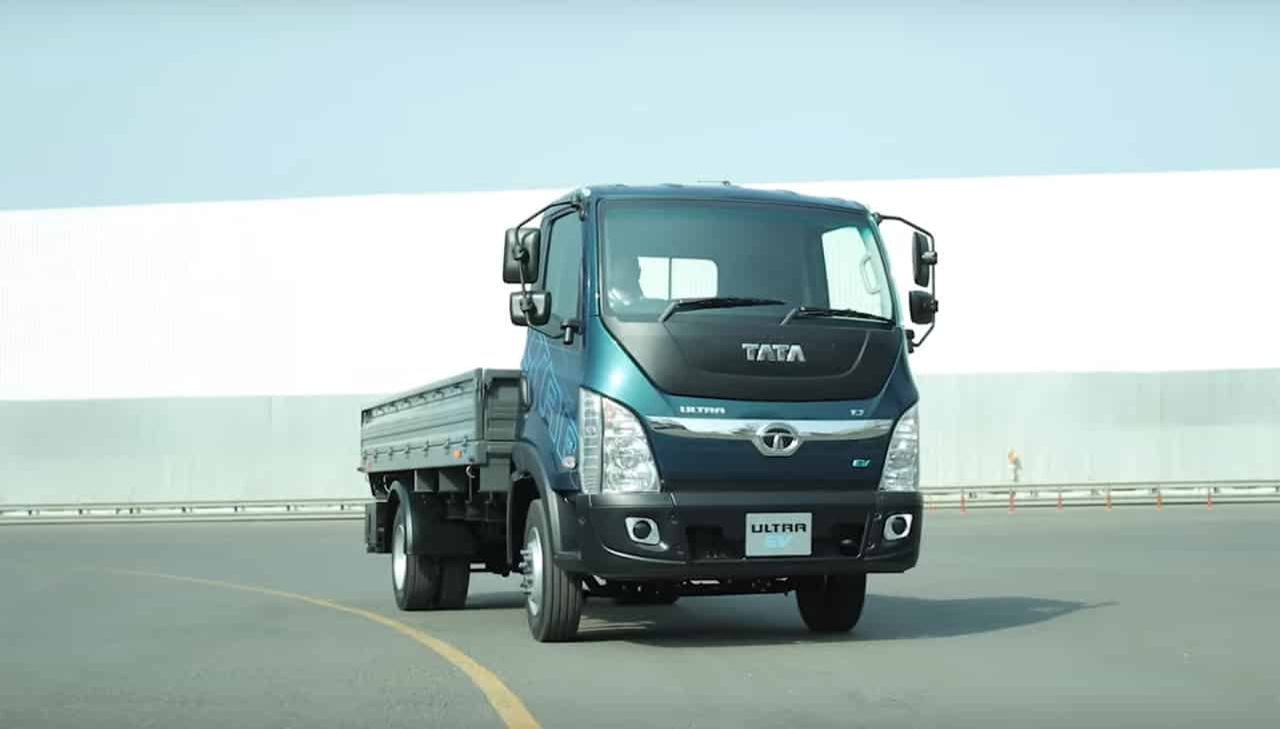


Electric Trucks are no longer “future technology” in India.
From in-plant material movement to last-mile logistics, EV trucks are being adopted rapidly because of lower running cost, zero tailpipe emission, and government push.
But here’s the uncomfortable truth:
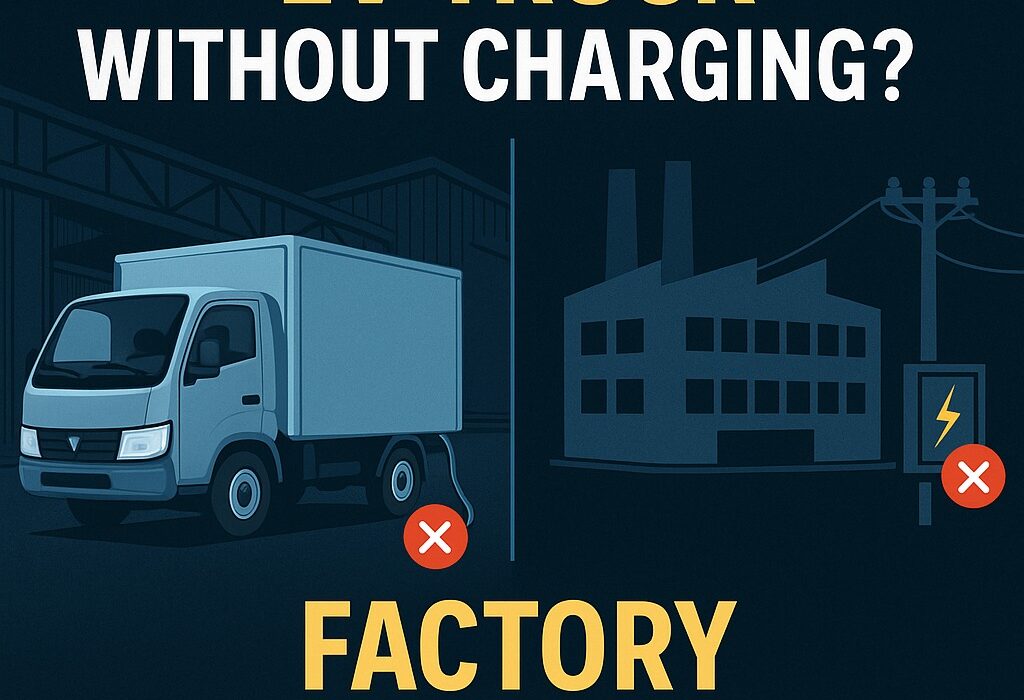
EV Truck bina charging planning ke kharidna = Factory bina bijli ke kharidna.
Sadly, this mistake is happening every single day.
Companies finalize EV truck models, payload, range, and price —
but charging infrastructure planning is treated as an afterthought.
And that’s where the real problems start.
Why EV Truck Charging Planning Is NOT Optional
Diesel truck buyers never worry about “fuel planning” because diesel pumps are everywhere.
EV trucks are different.
Charging is:
- Site-dependent
- Power-dependent
- Operations-dependent
If charging fails, truck khadi rahegi — productivity = ZERO.
No matter how good the vehicle is.
The Common Industry Mistake (Seen Across India)
Most EV truck buying journeys look like this:
- EV truck demo done ✅
- Payload & range discussion ✅
- Price negotiation ✅
- Subsidy / FAME check ✅
- Charging? “OEM bol raha hai ho jayega” ❌
This approach leads to:
- Project delays
- Under-utilized EV trucks
- Blame game between OEM, charger brand & installer
Real-World Impact: What Goes Wrong Without Charging Planning
1️⃣ Insufficient Power at Site
Many factories & warehouses discover after delivery that:
- Sanctioned load is too low
- Transformer capacity is insufficient
- DG backup cannot support charger load
Result:
EV truck hai, par charge lag hi nahi raha.
2️⃣ Wrong Charger Selection
Common confusion:
- AC vs DC charger
- Single gun vs dual gun
- Fast charging vs overnight charging
Sales ke time fast charger attractive lagta hai, but:
- Battery life suffers
- Demand charges increase
- Cost goes up unnecessarily
3️⃣ Charger & Vehicle Warranty Mismatch
Truck warranty: 3–5 years
Charger warranty: 1–2 years (sometimes limited)
Now imagine:
- Truck down due to charging issue
- OEM says charger issue
- Charger company says installation problem
End user stuck in between.
4️⃣ Heat, Dust & Indian Conditions Ignored
Most charger brochures talk about:
- Ideal temperature
- Controlled conditions
Reality:
- 45°C heat
- Dusty yards
- Voltage fluctuation
Without proper planning:
Charger frequently trips, slows down, or fails.
5️⃣ Operations Not Mapped
Charging decision without operations mapping leads to:
- Trucks waiting for charge
- Shift loss
- Forced diesel backup
Questions that should be asked but usually aren’t:
- Kitne trucks, kitna time gap?
- Opportunity charging possible hai ya nahi?
- Ek charger pe kitni gaadi depend karegi?
EV Truck = System, Not Just a Vehicle
An EV truck system includes:
- Vehicle
- Battery
- Charger
- Electrical infrastructure
- Software & monitoring
- Operation schedule
Agar inme se ek bhi weak hai → pura system fail karega.
Just like:
Factory mein machine ho, par bijli na ho.
Charging Planning Should Start BEFORE Finalizing the EV Truck
Ideal Buying Sequence (Correct Approach)
- Operation Study
- Daily km
- Load cycles
- Idle time
- Site Electrical Audit
- Sanctioned load
- Transformer margin
- Panel & cabling readiness
- Charging Strategy
- Overnight vs opportunity charging
- AC/DC requirement
- Expandability planning
- Then EV Truck Finalization
- Battery size validation
- Charging compatibility
- Realistic range matching
Iss order mein decision loge, toh problem nahi hogi.
Who Should Take Ownership? (Very Important)
One major gap in India EV ecosystem:
Single point responsibility ka absence
Best practice:
- OEM + Charger + Installer coordination
- Single escalation matrix
- Clear AMC & service timeline
Fleet buyers should demand this upfront.
What Smart EV Truck Buyers Are Doing Today
Forward-looking companies are:
- Planning charging for 2–3 years expansion
- Asking OEMs for real deployment references
- Prioritizing uptime over brochure speed
- Treating charger as critical infrastructure, not accessory
These buyers achieve:
✅ Higher vehicle utilization
✅ Lower downtime
✅ Faster ROI
Final Thought (Important)
EV Truck adoption is not just about buying a vehicle.
It is about building an energy-powered logistics system.
So remember:
EV Truck bina charging planning ke mat kharido — warna truck parking asset ban jayega, productive asset nahi.