

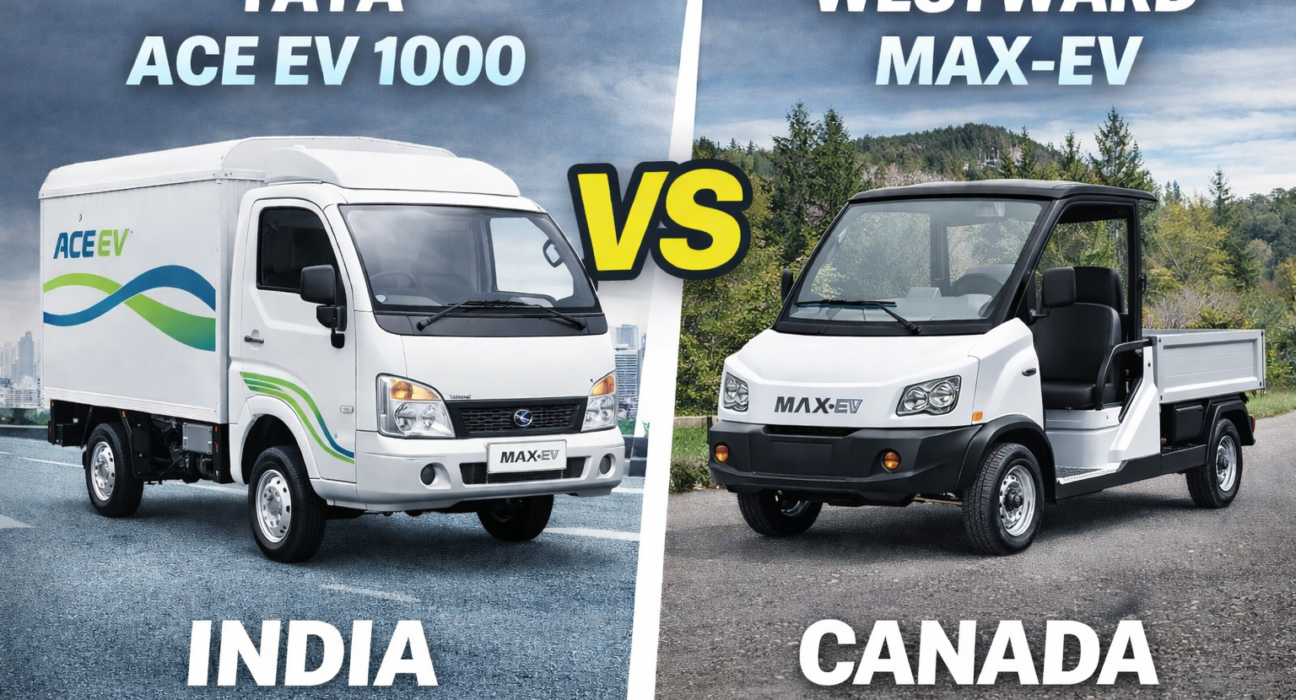
A Full-Scale Comparison of Specifications, Pricing, Range, Battery, Capacity and Use Case
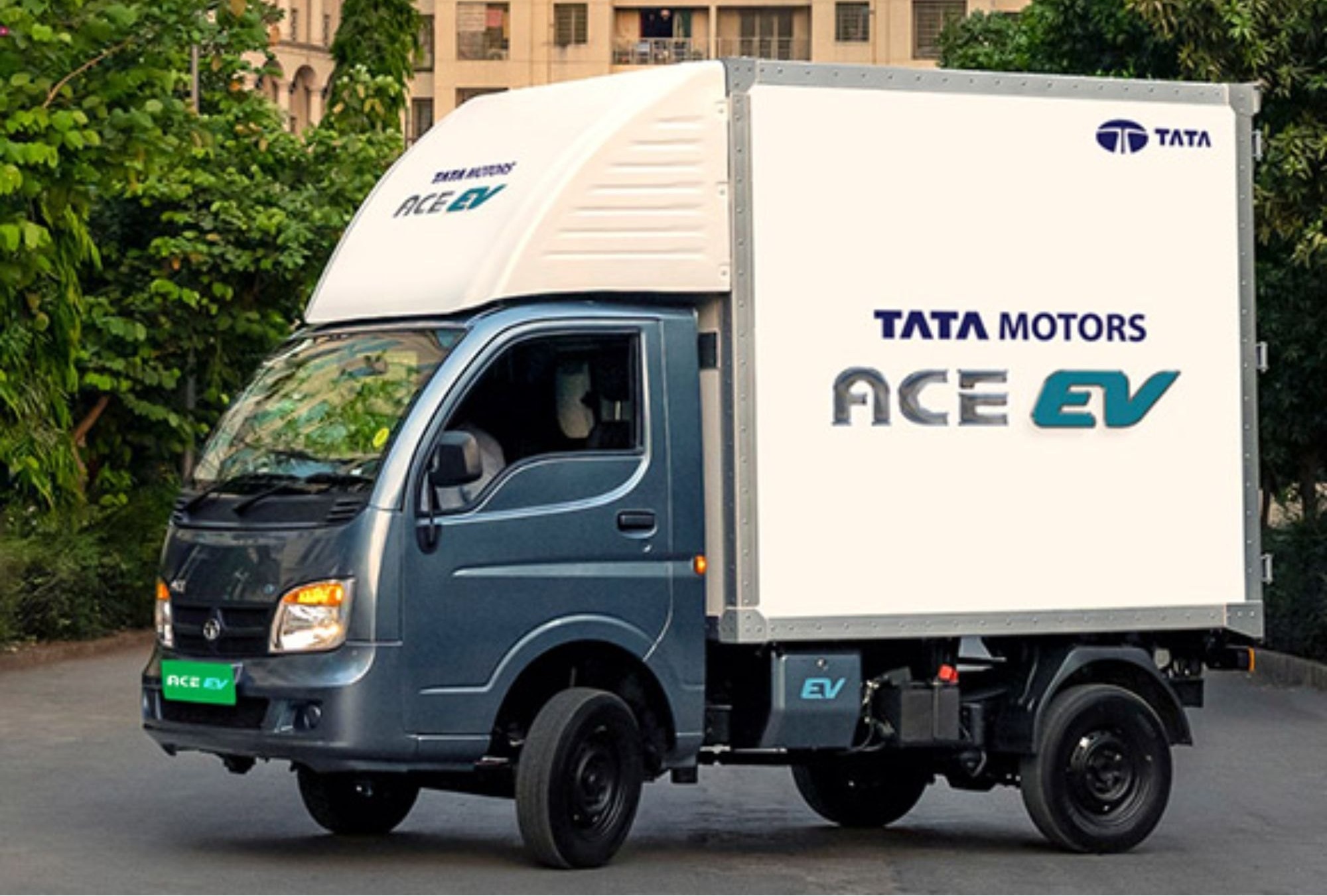
As electrification reshapes commercial transport across continents, regional electric truck solutions are evolving differently based on infrastructure, regulation, and operational needs. In India, the Tata Ace EV 1000 has become a benchmark in the one-ton electric mini-truck category. In Canada, Westward Industries’ MAX-EV serves municipal and industrial sectors as a low-speed electric utility truck.
Although both are electric cargo vehicles, they operate in different regulatory and functional segments. This comparison examines where they align — and where they fundamentally differ.
1. Manufacturer and Market Position
| Category | Tata Ace EV 1000 | Westward MAX-EV |
|---|---|---|
| Manufacturer | Tata Motors (India) | Westward Industries (Canada) |
| Official Website | https://smalltrucks.tatamotors.com | https://westwardindustries.com |
| Vehicle Type | Full-road mini commercial truck | Low Speed Vehicle (LSV) / Utility EV |
| Primary Market | Urban logistics & delivery | Municipal, campus & industrial fleets |
The Tata Ace EV is built for structured commercial road transport. The MAX-EV is engineered for controlled, low-speed environments.
2. Core Technical Specifications
| Specification | Tata Ace EV 1000 | Westward MAX-EV (LSV Variant) |
|---|---|---|
| Payload Capacity | 1,000 kg | Approx. 200–450 kg (varies by config) |
| GVW | Approx. 2,120 kg | Under 1,360 kg (LSV class limit) |
| Battery | 21.3 kWh LFP | Multiple options (approx. 6–32 kWh) |
| Claimed Range | Approx. 161 km per charge | Approx. 50–200 km depending on battery |
| Motor Power | Approx. 27 kW (36 HP) | Configuration dependent |
| Torque | Approx. 130 Nm | Configuration dependent |
| Top Speed | Suitable for city road speeds | Approx. 40 km/h (25 mph LSV limit) |
| Charging | AC depot charging | Level 1 & Level 2 (J1772) |
Source – Tata Brochure:
https://smalltrucks.tatamotors.com/assets/smalltrucks/files/2025-01/Ace%20EV%201000-Brochure.pdf
Source – Westward Product Page:
https://westwardindustries.com/max-ev-lsv/
3. Battery and Mileage Analysis
Tata Ace EV 1000 features a fixed 21.3 kWh Lithium Iron Phosphate battery delivering approximately 161 km range per charge. It is optimized for daily last-mile routes within city limits.
Westward MAX-EV offers modular battery options. Smaller battery packs provide short-distance utility range, while larger configurations can extend operational distance significantly. However, real-world range depends heavily on load, terrain, heating systems, and battery selection.
4. Pricing Comparison (India vs Canada)
Tata Ace EV 1000 – India
| Pricing Type | Value |
|---|---|
| Ex-Showroom Price | ₹11.27 – ₹11.50 lakh |
| Approx. USD Equivalent | USD 12,400 – 12,700 |
| Estimated On-Road Price | ₹11.9 – ₹12.6 lakh (varies by state) |
Reference Listing:
https://trucks.tractorjunction.com/en/tata-truck/ace-ev-1000
Currency reference (conversion basis):
https://www.xe.com
Westward MAX-EV – Canada
| Pricing Type | Value |
|---|---|
| Starting MSRP | Approx. USD 18,250 |
| Approx. CAD Equivalent | CAD 24,500 – 25,000 |
| Estimated Delivered Cost | USD 20,000 – 25,000 (with taxes & freight) |
Source:
https://westwardindustries.com/max-ev-lsv/
Important: Westward pricing excludes freight, taxes, and optional upgrades. Tata pricing excludes RTO, insurance, and state registration charges.
5. Operational Suitability
Best Suited For Tata Ace EV 1000
• E-commerce last-mile delivery
• FMCG distribution
• Grocery and neighborhood transport
• Urban commercial fleet deployment
• Full road legal cargo operations
Best Suited For Westward MAX-EV
• Municipal maintenance
• University campuses
• Airports
• Resorts and parks
• Industrial yards
• Low-speed cargo transport
The key difference lies in regulatory classification. Tata Ace EV operates as a full commercial vehicle. Westward MAX-EV is primarily limited to low-speed regulated environments.
6. Service and Support Network
Tata Ace EV benefits from Tata Motors’ nationwide dealer and service network across India, including commercial fleet support and extended battery warranty.
Westward MAX-EV operates through distributor and dealer networks across Canada and North America. Service availability depends on region and dealership coverage.
7. Strengths Comparison
| Area | Tata Ace EV 1000 | Westward MAX-EV |
|---|---|---|
| Payload Advantage | Higher (1 ton) | Lower |
| Road Legality | Full road commercial | Limited-speed roads only |
| Customization | Moderate | High modular customization |
| Urban Delivery | Excellent | Limited |
| Municipal Utility | Moderate | Excellent |
| Highway Capability | Yes (city compliant) | No |
8. Frequently Asked Questions
Q1. Are these vehicles direct competitors?
No. They serve different regulatory and operational segments.
Q2. Which vehicle offers higher payload?
Tata Ace EV 1000 with 1,000 kg payload.
Q3. Which is more affordable?
Tata Ace EV has a lower ex-showroom price in USD comparison, but both operate in different classes.
Q4. Can MAX-EV replace Tata Ace EV in commercial delivery?
Not for full-road city logistics. It is best suited for controlled environments.
Q5. Which vehicle is better for Indian conditions?
Tata Ace EV 1000 is specifically engineered for Indian urban commercial transport.
Conclusion
The Tata Ace EV 1000 represents India’s focused approach toward structured last-mile electrification, combining one-ton payload capacity with practical range and road legality at a competitive cost.
The Westward MAX-EV reflects Canada’s utility-driven EV strategy, prioritizing modular design and low-speed municipal functionality over highway capability.
Both vehicles demonstrate how electric transport adapts to regional infrastructure and operational demands. However, they are not identical competitors — they represent different interpretations of electric cargo mobility.