

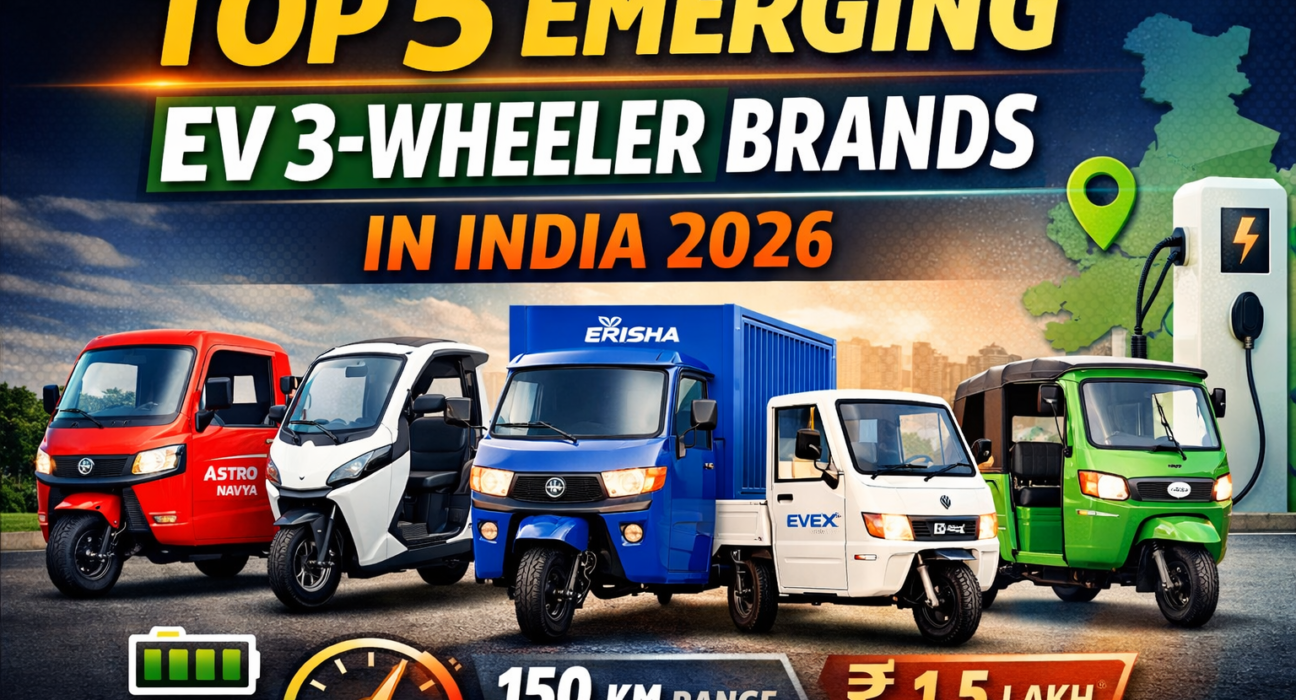
India’s last-mile logistics is booming, and electric 3-wheelers (cargo loaders + e-rickshaws) are growing fast because they match the reality of Indian routes: short distances, frequent stops, dense markets, and high daily utilization.
But beyond the “big” names, there are smaller / less talked-about brands that are quietly building products, dealer networks, and traction in specific regions. This article lists 5 such brands and focuses on numbers that actually matter (range, payload, battery, charging time, speeds, and real pricing where available).
What “doing well” means in this list
For smaller brands, public sales numbers are often not disclosed. So, in this article, “doing well” is defined using verifiable signals, like:
-
Publicly listed products and specs on official websites
-
Availability through dealer networks / marketplaces
-
Documented investments or funding (where available)
-
Presence across multiple vehicle variants (cargo / utility / passenger)
Quick Comparison Table
Note: Specs can vary by variant (open/closed body, lead-acid vs lithium, etc.). Where multiple numbers are publicly shown, I’ve stated the model/variant source.
| Brand | Segment Focus | Range (km) | Payload (kg) | Top Speed | Battery / Power | Charging Time | Price / Hint |
|---|---|---|---|---|---|---|---|
| Erisha E Mobility | Cargo + 3W | 140–160 km (model/portfolio) | ~700–750 kg (brand guidance) | 50+ km/h | (model dependent) | ~4 hrs | Funding: $1B Series D reported |
| iGoWise Mobility (BeiGo) | Urban electric trike (3W) | up to 140 km road range (variant dependent) | (not stated publicly on site) | 70 km/h | 2.2 / 3.6 / 4.4 kWh options | (not clearly stated on site) | On-road up to ₹2.40 lakh (variant) |
| Astro Motors (Navya) | L5 cargo e-loader | 130–131 km | 747 kg | 50 km/h | 10.24 kWh (LFP), 12 kW motor | ~4 hrs | Warranty: 3 yrs (extendable) |
| EVEX Auto (E-Loader / Ranger variants) | Cargo/utility e-loader | (variant dependent) | 500–700 kg (model dependent) | 25 km/h (E-Loader listing) | 1200W listed (some variants) | (variant dependent) | Often positioned as affordable regional option |
| Flux Emobility India Pvt Ltd | Utility 3W + e-rickshaw | (product dependent) | 300–500 kg (listed product) | (not stated) | 48V 100Ah lead-acid listed | (not stated) | Listed price around ₹1.50 lakh for one model |
1) Erisha E Mobility (Erisha) — Big range claims + cargo positioning
Erisha is not as mainstream in daily consumer conversations, but it’s a brand that shows strong ambition in India’s EV space and lists multiple 3-wheeler offerings.
Key numbers
-
Listed range: 140–160 km on their electric 3-wheeler page
-
The brand also states its 3-wheelers are designed for roughly 700–750 kg load ErishaE Mobility
-
One cargo variant page (E-Superior) mentions dynamic on-road 140–150 km, ARAI certified 154 km, 50 km/h, and 700 kg load
“Doing well” signal: large funding reported
Erisha is also notable because reported funding/investment numbers exist publicly. Tracxn and Autocar Pro have reported Erisha-related funding signals including a $1B round/investment (as reported in those sources). MarkLines+3Tracxn+3Autocar Professional+3
Why this brand is interesting for your readers
-
Erisha content pulls search intent (range + payload + charging time) and investor curiosity (funding news).
-
Great for your “numbers-first” article style: specs + certification claim + load limits.
2) iGoWise Mobility (BeiGo) — “anti-topple / self-balancing” electric trike story
iGoWise is a Bengaluru-based player with a product angle that is very different from typical e-rickshaws: a more “urban commuter / utility trike” positioning with safety design as a hook.
Key numbers
Their own site lists:
-
Top speed: 70 km/h igowise.com
-
Battery options shown: 2.2 kWh / 3.6 kWh / 4.4 kWh
-
Road range shown up to 140 km
-
Pricing displayed up to ₹2.40 lakh on-road
Additional “interesting numbers” from an auto news write-up
One report describes the trike as self-balancing with a safety-focused anti-topple design; it also mentions 80 Nm torque and 0–30 km/h in 3.3 seconds (model/announcement context). ACKO Drive
Why include this in a “cargo/loader” list?
Because it’s a fresh-format 3-wheeler story your audience will share: not just “another loader”, but a “new thinking” 3W platform that can be relevant for urban delivery & utility use-cases depending on variants.
3) Astro Motors (Navya) — L5 cargo e-loader with standout payload + gearbox
Astro Motors is a strong pick for your “not so popular but doing well” theme because they publish very concrete specs and focus directly on commercial cargo operations.
Key numbers (Navya cargo)
Astro’s official pages list:
-
Rated payload: 747 kg Astro Motors+1
-
Certified range: ~130 km and also listed as 131 km in another page (range varies by listing/rounding)
-
Battery: 10.24 kWh (LFP)
-
Top speed: 50 km/h
-
Charging time: ~4 hours
-
Motor (peak): 12 kW and vehicle torque (peak): 630 Nm
-
A highlighted differentiator: manual 4-speed gearbox in L5 segment
-
Battery warranty: 3 years (extendable up to 5)
Why Astro is “engaging”
This brand gives you the “wow” combination:
-
High payload
-
Known battery chemistry
-
Gearbox (easy to discuss in Indian load/gradeability context)
-
Clear warranty & charging numbers
4) EVEX Auto (EVEX) — Regional cargo + utility 3W variants with 500–700 kg payload band
EVEX is best positioned in your article as a regional workhorse brand: multiple utility variants (loader, ranger variants, garbage, etc.) and specs that match municipal/utility and small-business needs.
Key numbers
Different sources list different EVEX models and specs:
EVEX E-Loader
-
Payload: 700 kg
-
Top speed: 25 km/h
EVEX “Ranger” type specs
-
One EVEX page lists a model with:
-
Loading capacity: 500 kg
-
Range: 130 km per charge (150Ah battery)
-
Motor power: 1200–1500W
-
Top speed: 25 km/h
-
-
A marketplace listing for Ranger LDR shows payload: 500 kg
Why EVEX is interesting
EVEX lets you write a highly practical buyer guide section:
-
“Which EVEX variant fits which business?”
-
Utility/garbage/school-van type use-cases
-
Low-speed vs high-speed category implications
5) Flux Emobility India Pvt Ltd — Small manufacturer profile + affordable lead-acid product listings
Flux Emobility India is a good “less popular” inclusion because it shows up in manufacturer listings and B2B product catalogs.
Key numbers
TradeIndia listings tied to Flux show:
-
A listed electric rickshaw with Battery: 48V 100Ah, Charger: 48V 15A, and capacity: 300–500 kg
-
A listed price of around ₹1,50,000 for that model
-
Flux is also listed among Indian electric 3-wheeler manufacturers with incorporation details and product categories
-
TradeIndia profile states “Established in 2022” for Flux Emobility India Pvt Ltd.
Why Flux is interesting for your readers
Because many small-town buyers search:
-
“₹1.5 lakh loader / e-rickshaw”
-
“48V 100Ah e-rickshaw”
And Flux appears in those B2B discovery funnels.
How to choose the right “new / lesser-known” brand (simple buyer checklist)
If your priority is payload + daily commercial work
-
Start with Astro Navya (747 kg) and Erisha (700 kg class) and compare charging + service availability in your district.
If your priority is “unique story + urban mobility angle”
-
iGoWise gives you a very shareable angle (anti-topple / self-balancing + higher speed).
If your priority is budget-first lead-acid setups (B2B listing style)
-
Flux and similar B2B-listed manufacturers can be explored — but verify after-sales/service and warranty terms locally.
FAQs
1) What payload is considered “good” for an EV cargo 3-wheeler in India?
In the cargo 3W space, 500–750 kg payload is a common decision band. For example, Astro lists 747 kg, EVEX listings show 500–700 kg, and Erisha mentions 700 kg class depending on variant.
2) What range should I realistically target for a loader?
For last-mile cargo, many buyers target 100–150 km depending on route and charging access. In this list, Erisha pages show 140–160 km, Astro shows ~130 km, and EVEX pages show up to 130 km on certain variants.
3) Are these brands “new startups” or “emerging manufacturers”?
Some are true newer players/brands in public perception; some may be connected to larger groups or older manufacturing ecosystems. I’ve included them because they are less mainstream yet active, with public specs + product presence you can verify.
4) Is 25 km/h top speed good or bad?
It depends on your use:
-
Local market / internal routes / controlled areas: 25 km/h can be fine.
-
Mixed traffic + longer routes: higher speed products may reduce trip time (but check category rules, safety, and licensing requirements).
EVEX’s E-Loader listing shows 25 km/h, while Astro lists 50 km/h, and iGoWise lists 70 km/h (different product intent).
5) Where can I verify a model’s exact specs before buying?
Use:
-
The brand’s official model page (best starting point)
-
One large vehicle marketplace listing (as a cross-check)
-
A local dealer quotation sheet (final truth for variant)
(Example sources used above include official brand pages + vehicle listing pages.)