

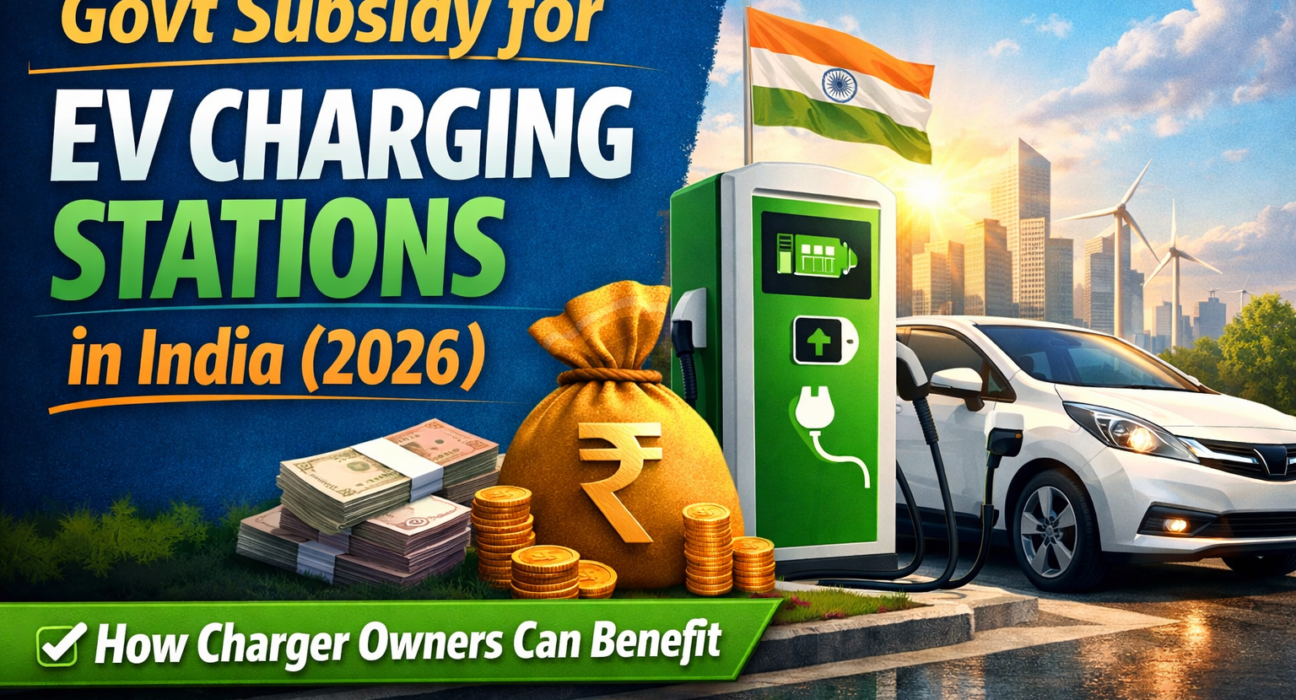
Electric vehicles (EVs) are rapidly transforming India’s mobility landscape — and charging infrastructure is critical to supporting this shift. To accelerate adoption, the Government of India has introduced progressive subsidy schemes and incentives for EV charging stations throughout 2026. This blog explains what subsidies are available, who’s eligible, how charger owners can benefit, and what steps you must take to tap into government support.
1. Overview: Why EV Charging Subsidies Matter
India’s EV ecosystem is expanding fast. However, range anxiety and lack of convenient charging networks remain major adoption barriers. To counter this, the Indian government provides financial incentives, tax benefits, and policy frameworks to encourage companies and individuals to invest in charging infrastructure.
Key benefits of subsidies include:
- Lower upfront investment costs
- Faster deployment of chargers
- Boosted return on investment (ROI)
- Enhanced business opportunities
Primary targets: private EV charging firms, CPOs (Charging Point Operators), e-mobility startups, real estate developers, and fleet operators.
2. Major Government Schemes Supporting EV Charging Infrastructure (2026)
📌 2.1 Faster Adoption and Manufacturing of Electric Vehicles (FAME) Scheme
The FAME scheme (Phase II & Phase III continuation) remains India’s flagship EV support program. Under this, subsidies are provided for:
- EV charging station infrastructure
- Capital expenditure (capex) support for setting up public chargers
Who it benefits:
EV charging companies, commercial property owners, fleet operators, and OEMs installing charging points.
Pro Tip: Since new guidelines are rolling out frequently, always check the latest official notification from the Department of Heavy Industries (DHI). External link idea: Ministry of Heavy Industries – FAME India official page.
📌 2.2 Production Linked Incentive (PLI) for Advanced Chemistry Cell (ACC) Batteries
Although focused on battery manufacturing, the PLI indirectly benefits charging infrastructure by reducing battery costs and driving EV adoption overall — resulting in higher demand for charging stations.
📌 2.3 State-Level EV Policies
Many states are offering additional incentives to make EV charging installation easier and more profitable.
Examples include:
- GST rebate / concessional electricity tariffs
- Land lease subsidies
- Single-window clearances
- Property tax reduction for charging infrastructure
Top states offering benefits: Delhi, Maharashtra, Karnataka, Tamil Nadu, Gujarat (check latest policy documents for specifics).
3. What Subsidies & Benefits Charger Owners Can Get
Here’s a breakdown of possible subsidies and incentives available for EV charging station owners in 2026:
✅ 3.1 Capex Subsidy Support
Government covers a portion of the installation cost for eligible charging units (especially fast & ultra-fast chargers).
👉 Reduces initial cost burden significantly.
✅ 3.2 Custom Duty & Tax Exemptions
In some schemes:
- Reduced import duties on charging equipment
- GST reductions on charging services
✅ 3.3 Low-Interest Loans & Credit Support
Partner banks or financial institutions provide priority lending at favorable rates.
✅ 3.4 Land & Utility Benefits
- Land allocated at concessional lease rates
- Lower electricity tariff slabs for charging station usage
✅ 3.5 Priority Permits & Fast Approvals
Fast-track clearances via single-window systems reduce delays and compliance cost.
4. Eligibility Criteria (General Guidelines)
While eligibility varies by scheme, typical requirements include:
✔ Registered Indian entity (company/LLP/sole proprietorship)
✔ GST and business registration
✔ Technical specifications complying with BIS / AIS standards
✔ Bank account and financial documents
✔ Site plan and power connection readiness
Note: Certain subsidies are specific to public charging points (not just private or fleet chargers).
5. Step-by-Step: How to Apply for EV Charging Subsidies
- Identify relevant scheme — central or state level
- Prepare documentation (business, technical, financial)
- Submit online application via official portals
- Site inspection & approval
- Installation & commissioning of chargers
- Claim subsidy / reimbursement (after compliance verification)
Tip: Always follow the latest guidelines and timelines from relevant authorities like the Department of Heavy Industries (DHI) and State EV Cells.
External Linking & Reference Recommendations
For authority and user trust, include links such as:
- Ministry of Heavy Industries – FAME India
https://heavyindustries.gov.in/ - Bureau of Indian Standards (BIS) – EV charger standards
https://bis.gov.in/ - State EV Policy portals (e.g., Maharashtra EV Policy, Karnataka EV Policy)
- Central Electricity Authority (CEA) guidelines for EV charging infrastructure
Frequently Asked Questions
Q1. What is the current government subsidy for EV charging stations in India?
Subsidy amounts vary by scheme — many provide partial capex support depending on charger type (AC, DC fast, ultra-fast). Check the latest FAME / state policy notification for current rates.
Q2. Are home-based EV chargers eligible for subsidies?
Most central subsidies focus on public charging infrastructure. Some regional/state incentives may support home chargers for multi-dwelling units or EV fleets.
Q3. Which chargers qualify for subsidy?
Typically, standardized and BIS / AIS compliant AC & DC fast charging equipment installed at public or commercial locations.
Q4. Can private businesses install and claim subsidy?
Yes — private companies and entrepreneurs can setup public chargers and apply for eligible subsidies.
Q5. How long does it take to get subsidy approval?
Approval timelines vary by authority and scheme — ensure complete documentation and compliance to avoid delays.
Conclusion
Government subsidies for EV charging stations in India in 2026 present significant opportunities for charger owners — lowering costs, improving profitability, and accelerating EV adoption. Whether you’re a startup, real estate owner, fleet operator, or charging operator, understanding and leveraging these schemes can give you a competitive edge.