

India’s central electric vehicle subsidy framework has changed significantly after the closure of FAME-II. From late-2024 onward, the Government of India is implementing a new national scheme called PM E-DRIVE (Prime Minister Electric Drive Revolution in Innovative Vehicle Enhancement).
This article provides a fully updated, numbers-based, category-wise subsidy breakdown for 2026, with official limits, tables, examples — strictly based on government notifications and portals.
1. Is FAME-II Active in 2026?
No.
The FAME-II scheme officially ended, and all central EV subsidies are now governed under PM E-DRIVE.
FAME-II timeline:
- Launched: April 2019
- Effective till: March 2024
- Replaced by: PM E-DRIVE (from October 2024)
Official government source:
https://pmedrive.heavyindustries.gov.in/
2. What Is PM E-DRIVE? (Official Overview)
Scheme Name: PM E-DRIVE
Ministry: Ministry of Heavy Industries, Government of India
Total Outlay: ₹10,900 crore
Scheme Period: 1 October 2024 to 31 March 2026
Objectives
- Accelerate adoption of electric vehicles
- Reduce oil imports and urban pollution
- Support commercial EV segments
- Expand EV charging infrastructure
- Support EV testing and homologation facilities
3. Total Budget Allocation (Official Figures)
| Component | Allocation (₹ crore) |
|---|---|
| Demand incentives (vehicle subsidies) | 3,679 |
| Electric buses (procurement support) | 4,391 |
| EV charging infrastructure | 2,038 |
| Testing agencies & upgrades | 792 |
| Total PM E-DRIVE Outlay | 10,900 |
(Source: Gazette Notification & PM E-DRIVE portal)
4. Core Subsidy Rule (Very Important)
For most vehicle categories:
- Subsidy is linked to battery capacity (₹/kWh)
- Subsidy is capped per vehicle
- Subsidy cannot exceed a percentage of ex-factory price
- Lower of all limits applies
Two different rates apply across the scheme period.
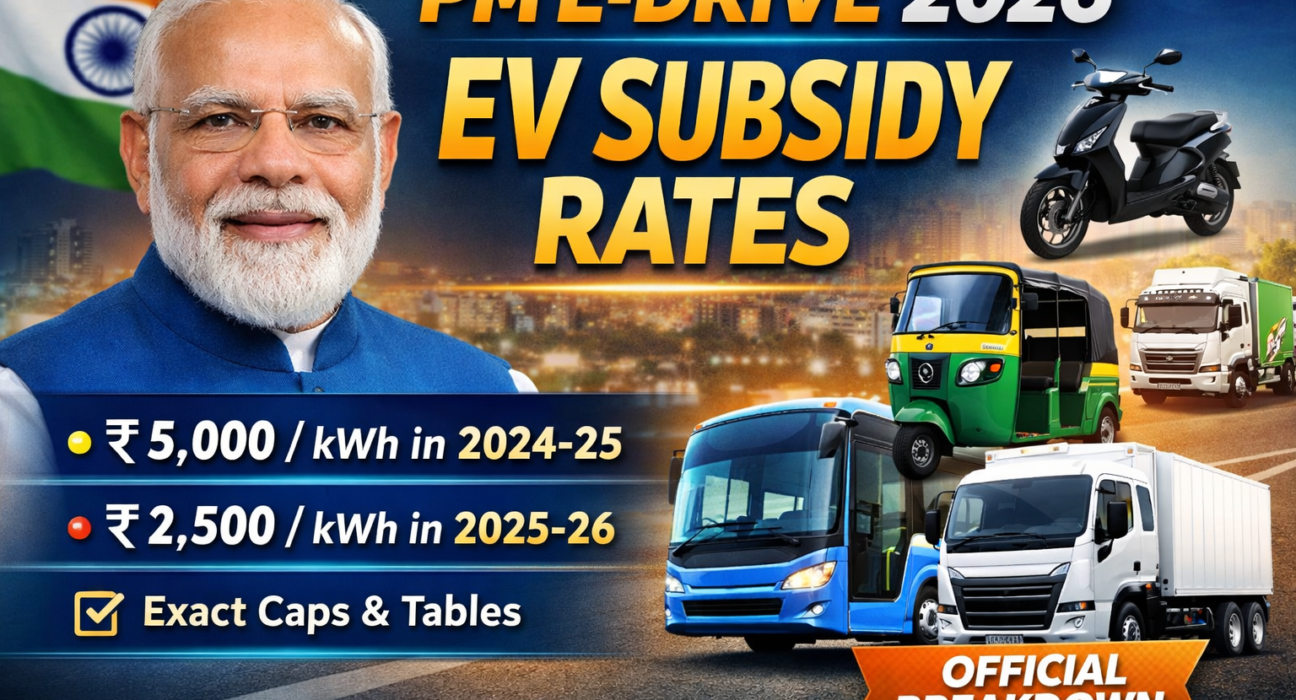
5. EV Subsidy Rates: FY 2024-25 vs FY 2025-26
Key Change You Must Know
The government reduced per-kWh subsidy in FY 2025-26.
| Financial Year | Subsidy Rate |
|---|---|
| FY 2024-25 | ₹5,000 per kWh |
| FY 2025-26 | ₹2,500 per kWh |
6. Category-Wise EV Subsidy Breakdown (Exact Figures)
A. Electric Two-Wheelers (Registered)
| Parameter | FY 2024-25 | FY 2025-26 |
|---|---|---|
| Subsidy rate | ₹5,000 / kWh | ₹2,500 / kWh |
| Maximum subsidy | ₹10,000 | ₹5,000 |
| Price cap | 15% of ex-factory price | 15% of ex-factory price |
| Eligible vehicles | Registered commercial & private |
Example (2026):
- Battery: 3 kWh
- Calculation: 3 × ₹2,500 = ₹7,500
- Cap applied: ₹5,000
- Final subsidy: ₹5,000
B. Electric Rickshaw & E-Cart
| Parameter | FY 2024-25 | FY 2025-26 |
|---|---|---|
| Subsidy rate | ₹5,000 / kWh | ₹2,500 / kWh |
| Maximum subsidy | ₹25,000 | ₹12,500 |
| Price cap | 15% of ex-factory price | 15% of ex-factory price |
Important update:
- Government has announced phase-out of e-rickshaw subsidies after targets were achieved
- Buyers must verify availability on PM E-DRIVE portal before purchase
C. Electric 3-Wheeler (L5 Category)
| Parameter | FY 2024-25 | FY 2025-26 |
|---|---|---|
| Subsidy rate | ₹5,000 / kWh | ₹2,500 / kWh |
| Maximum subsidy | ₹50,000 | ₹25,000 |
| Price cap | 15% of ex-factory price | 15% of ex-factory price |
Example:
- Battery: 10 kWh
- 10 × ₹2,500 = ₹25,000
- Final subsidy: ₹25,000
D. Electric Buses
| Parameter | Value |
|---|---|
| Subsidy rate | ₹10,000 per kWh |
| Maximum subsidy | ₹2 crore per bus |
| Supported under | GCC / STU / PSU procurement |
| Battery size | Typically 200–350 kWh |
Electric buses receive the highest support due to public transport impact.
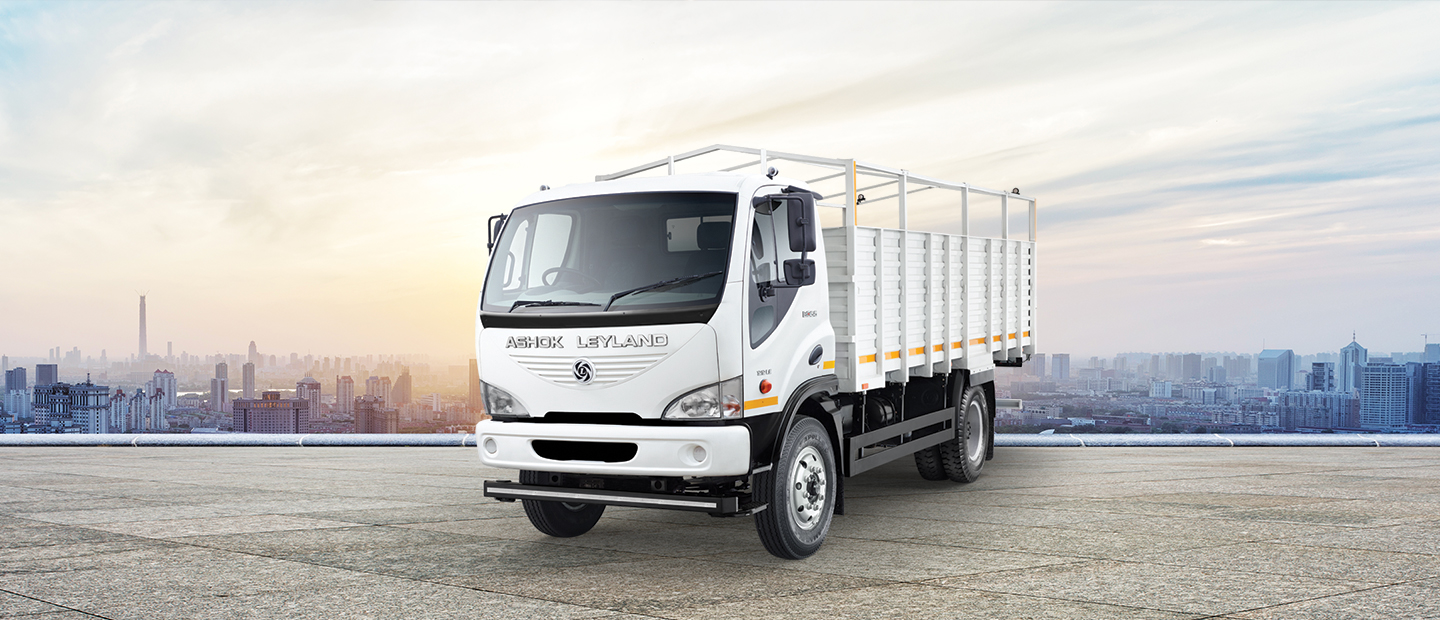
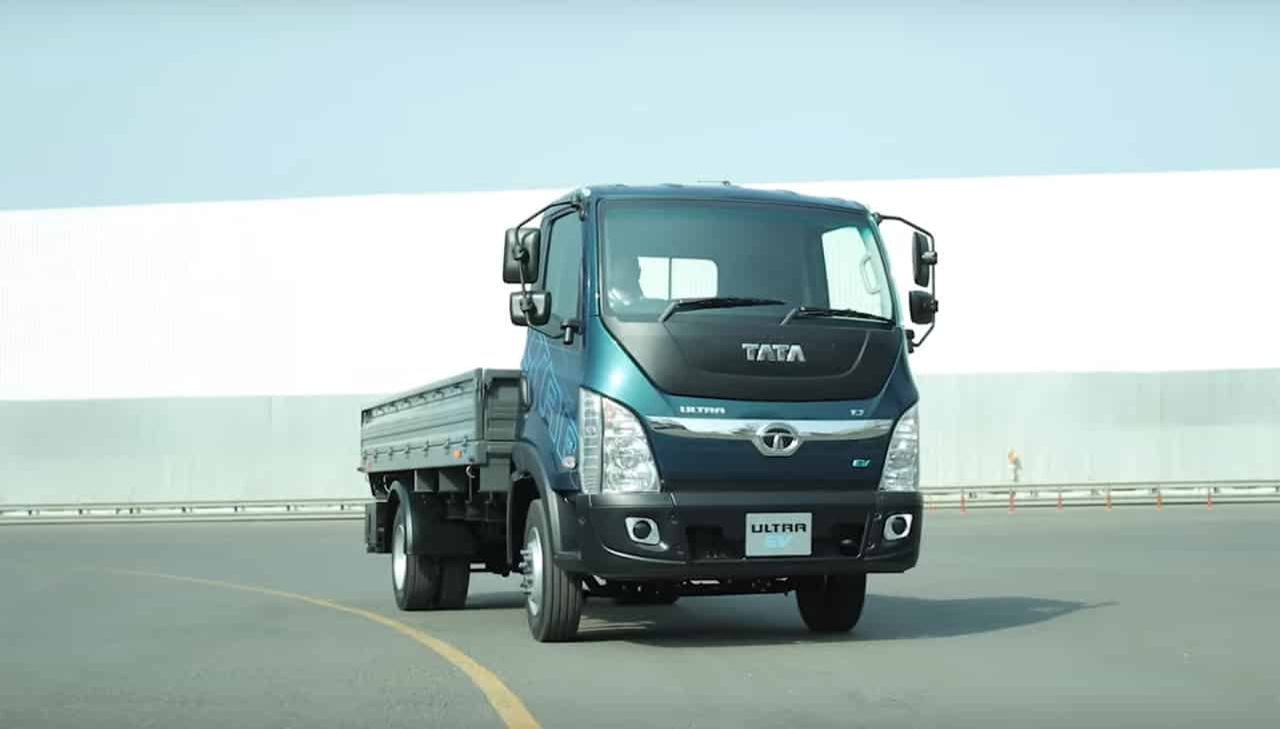
E. Electric Trucks (Commercial Goods Vehicles)
Electric trucks are covered under “Emerging EV Categories” with a separate formula.
Subsidy is the LOWEST of:
- ₹5,000 × Battery Capacity (kWh)
- 10% of ex-factory price (maximum ₹1.25 crore)
- Maximum incentive allowed based on GVW (Gross Vehicle Weight)
Example:
- Battery: 120 kWh → ₹6,00,000
- Truck ex-factory price: ₹55 lakh → 10% = ₹5,50,000
- Final subsidy: ₹5,50,000
Official reference:
https://pmedrive.heavyindustries.gov.in/
7. How Subsidy Is Given (Buyer Process)
- Buyer selects eligible EV
- Aadhaar-based e-voucher is generated
- Subsidy is adjusted directly on invoice
- OEM claims subsidy from Government
- Buyer pays reduced price upfront
No separate reimbursement is required from buyer side.
8. Central + State Subsidy: Can You Combine?
Yes.
PM E-DRIVE incentives can be combined with state EV policies, such as:
- Road tax exemption
- Registration fee waiver
- Capital subsidy (fleet, charging, manufacturing)
State policies vary and must be checked individually.
9. Key Government Links (Official)
PM E-DRIVE Portal
https://pmedrive.heavyindustries.gov.in/
Ministry of Heavy Industries
https://heavyindustries.gov.in/
Press Information Bureau (EV policy updates)
https://pib.gov.in/
10. Frequently Asked Questions (FAQs)
Q1. Is FAME-II still applicable in 2026?
No. FAME-II has ended. PM E-DRIVE is the only active central EV subsidy scheme.
Q2. Are private electric cars eligible?
No. PM E-DRIVE does not subsidize private electric cars.
Q3. Are electric trucks subsidized?
Yes. Commercial electric trucks are supported with battery-linked incentives and price caps.
Q4. Has subsidy for electric 3-wheelers ended?
Subsidies are being phased out once category targets are met. Availability must be verified at time of purchase.
Q5. Why was subsidy reduced in 2026?
The government follows a declining incentive model to reduce dependence on subsidies as EV adoption matures.
Final Takeaway
PM E-DRIVE is not a continuation of FAME-II, but a more targeted, infrastructure-focused EV policy for 2024-26.
- Highest support now goes to buses, trucks, and commercial EVs
- Light EV subsidies are reduced but still active
- Charging infrastructure receives massive backing
- Buyers must check real-time eligibility before purchase